
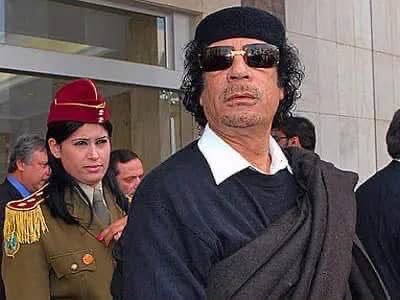
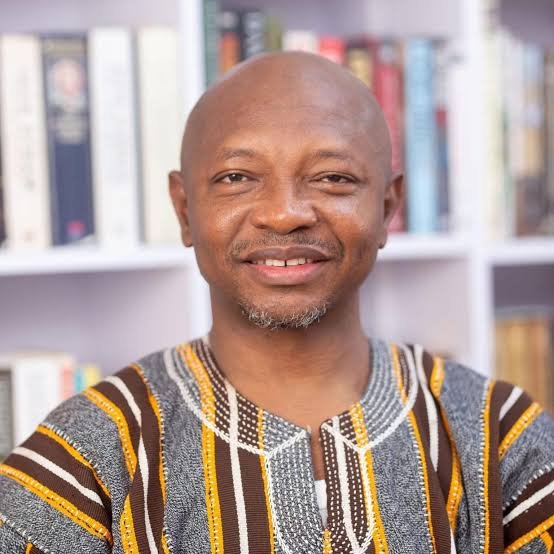
Fifteen years ago, on 20 October 2011, Muammar Gaddafi was captured and killed in Sirte, Libya, following a NATO-backed military intervention that began under the stated objective of protecting civilians. For journalist and former Member of Parliament Ras Mubarak, the consequences of that intervention continue to raise difficult questions about African sovereignty, regional security and the continent’s ability to determine its own future.
Fifteen years later, Mubarak argues that Libya’s experience offers a warning about the consequences of foreign military intervention and the dismantling of African states without a viable plan for what follows.
Libya After Gaddafi: From Intervention to Instability
Before the 2011 conflict, Libya was one of Africa’s more developed countries, with public healthcare and education programmes supported by its oil wealth. Since Gaddafi’s fall, however, the country has endured prolonged political fragmentation, armed conflict, militia rule and competition between rival authorities.
The country’s oil resources, once used to finance public services and investments beyond its borders, have also been at the centre of struggles for political and economic control.
Mubarak argues that the intervention failed to deliver the stability and democratic governance that its supporters had promised. In his assessment, Libya’s continuing instability demonstrates the dangers of military action that removes a government without securing a durable political settlement.
The intervention was authorised by United Nations Security Council Resolution 1973, which permitted member states to take necessary measures to protect civilians and civilian-populated areas under threat. NATO subsequently led the military operation, which ended on 31 October 2011.
For Mubarak, the central question is not simply whether Gaddafi’s government was authoritarian, but whether the intervention and the collapse that followed served the long-term interests of the Libyan people and Africa as a whole.
The Sahel’s Security Crisis and the Flow of Weapons
The consequences of Libya’s collapse extended beyond its borders.
The breakdown of central authority left large quantities of weapons vulnerable to capture, diversion and trafficking. Weapons and returning fighters from Libya contributed to growing insecurity in the Sahel, particularly as armed groups gained access to military equipment previously held in Libyan government stockpiles.
The United Nations warned in January 2012 of rising weapons proliferation, organised crime and terrorism across the region following the Libyan crisis. Subsequent assessments also documented the movement of weapons from Libya into neighbouring countries, including Mali.
The influx of arms was one of several factors that contributed to the escalation of conflict in Mali in 2012. Existing political tensions, local grievances, weak state institutions and the activities of armed groups also played significant roles.
Mubarak argues that the instability that followed Libya’s collapse should not be treated as an isolated regional crisis. In his view, it demonstrates how the consequences of military intervention can spread across borders, placing additional pressure on countries already facing security and governance challenges.
He contends that the international community must confront the long-term regional consequences of interventions rather than focus exclusively on their immediate military objectives.
African Sovereignty and the Cost of Political Independence
At the heart of Mubarak’s argument is the question of whether African countries can pursue independent political and economic agendas without becoming vulnerable to external pressure.
He draws parallels between Gaddafi and several African leaders whose political projects challenged established power structures, including Ghana’s Kwame Nkrumah, the Democratic Republic of the Congo’s Patrice Lumumba, Togo’s Sylvanus Olympio, Burkina Faso’s Thomas Sankara, Mali’s Modibo Keita, Guinea’s Amílcar Cabral and Cameroon’s Félix-Roland Moumié.
Mubarak maintains that the histories of these leaders reveal recurring struggles over political independence, control of national resources and the direction of Africa’s development.
He points to Gaddafi’s support for the African Union, his advocacy for greater continental integration and his proposals for stronger African financial and political institutions as important elements of his legacy.
Nevertheless, Gaddafi’s record remains contested. His government was authoritarian, and his rule was marked by serious human rights concerns. Recognising these realities, however, does not remove the need to examine the consequences of the 2011 intervention and the instability that followed.
For Mubarak, the broader lesson is that Africa must be able to debate the legacies of its leaders honestly while examining the interests that shape foreign intervention on the continent.
He warns that African countries risk repeating past mistakes if they fail to recognise how external interests, domestic political divisions and weak regional institutions can combine to undermine national sovereignty.
An Africa-First Agenda: From Rhetoric to Action
Mubarak argues that Africa’s response must go beyond speeches about unity and independence. He calls for practical measures that strengthen cooperation, improve regional security and reduce the continent’s dependence on external powers.
His proposals include five priorities:
Prioritise the free movement of Africans.
He argues that the free movement of people across African borders should be treated as a strategic priority rather than merely a political slogan. Greater continental mobility, he maintains, would strengthen economic cooperation and bring African countries closer together.
Strengthen African conflict-resolution mechanisms.
Mubarak calls for continental institutions capable of mediating internal conflicts and supporting peaceful settlements before disputes escalate or create pressure for external military intervention.
Reduce dependence on external security arrangements.
He urges African governments to build their own capacity to address security challenges instead of relying excessively on foreign military powers whose interests may not always align with those of African countries.
Invest in African industrial, military and diplomatic capacity.
According to Mubarak, stronger domestic institutions and regional cooperation would make it more difficult for individual African states to become isolated or destabilised. He argues that industrial development, effective security institutions and coordinated diplomacy must form part of a broader strategy for continental self-reliance.
Teach Africa’s political history honestly.
Mubarak calls for greater attention to the continent’s political history, including the 1961 murder of Patrice Lumumba, the 1963 assassination of Sylvanus Olympio, the 1966 overthrow of Kwame Nkrumah and the 1987 assassination of Thomas Sankara.
He argues that future generations must understand the circumstances surrounding these events and their implications for African independence, governance and international relations.
For him, a more complete understanding of this history is necessary if African societies are to make informed decisions about their political future.
Fifteen Years Later, What Has Africa Learned?
As the fifteenth anniversary of Gaddafi’s death is marked, Mubarak argues that Libya’s experience remains relevant to contemporary debates about African sovereignty, security and regional integration.
He maintains that the continent cannot afford to overlook the relationship between the collapse of political institutions, the proliferation of weapons and the vulnerability of neighbouring states.
His message is that African governments must take greater responsibility for building institutions capable of resolving conflicts, protecting national interests and cooperating across borders.
Mubarak also challenges African leaders and citizens to examine the role of both external powers and domestic political actors in shaping the continent’s future. In his view, meaningful independence requires more than the formal recognition of national sovereignty; it requires the institutional and economic capacity to defend it.
“Until Africans organise around their own interests with the same ruthlessness that others organise around theirs, the pattern will repeat,” he argues.
Fifteen years after Gaddafi’s death, Libya’s political fragmentation and the continuing security challenges across parts of the Sahel remain reminders of the far-reaching consequences of state collapse and regional instability.
For Mubarak, the way forward lies in greater African cooperation, stronger institutions and a commitment to making the continent’s political and economic future a priority.
His concluding warning is direct: Africa must strengthen its capacity to determine its own future or risk repeating the divisions and instability that have marked its modern political history.