
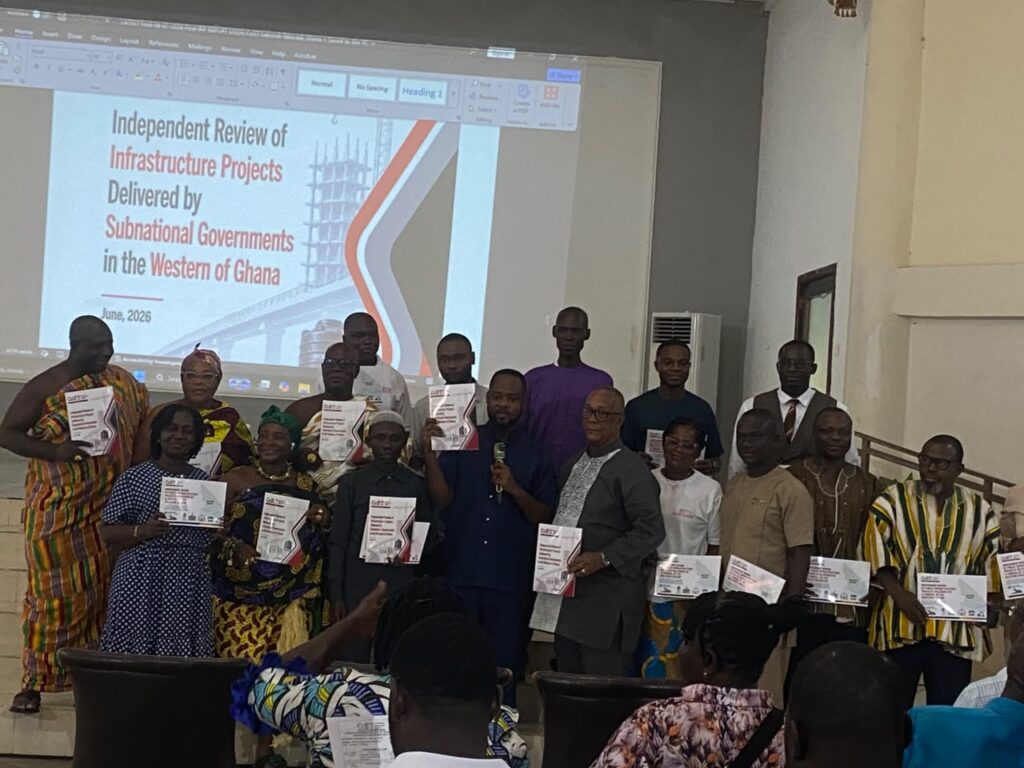
The CoST Sekondi-Takoradi Multi-Stakeholder Group has launched and disseminated its third Independent Review (Assurance) Report on public infrastructure projects delivered by the 14 Metropolitan, Municipal and District Assemblies (MMDAs) in the Western Region, highlighting progress in infrastructure governance while identifying persistent gaps in transparency, disclosure and quality assurance.
The report, launched at the Akroma Plaza Hotel in Takoradi, is based on an independent assessment of 28 public infrastructure projects across six sectors, including water and sanitation, implemented by the 14 assemblies over a five-month review period.
Speaking at the opening ceremony, Chairman of the CoST Sekondi-Takoradi Multi-Stakeholder Group, Eugene F. Ofori-Atta, described the launch as “more than the unveiling of a report,” saying it reaffirmed the region’s commitment to promoting transparency, accountability, citizen participation and evidence-based decision-making in public infrastructure delivery.
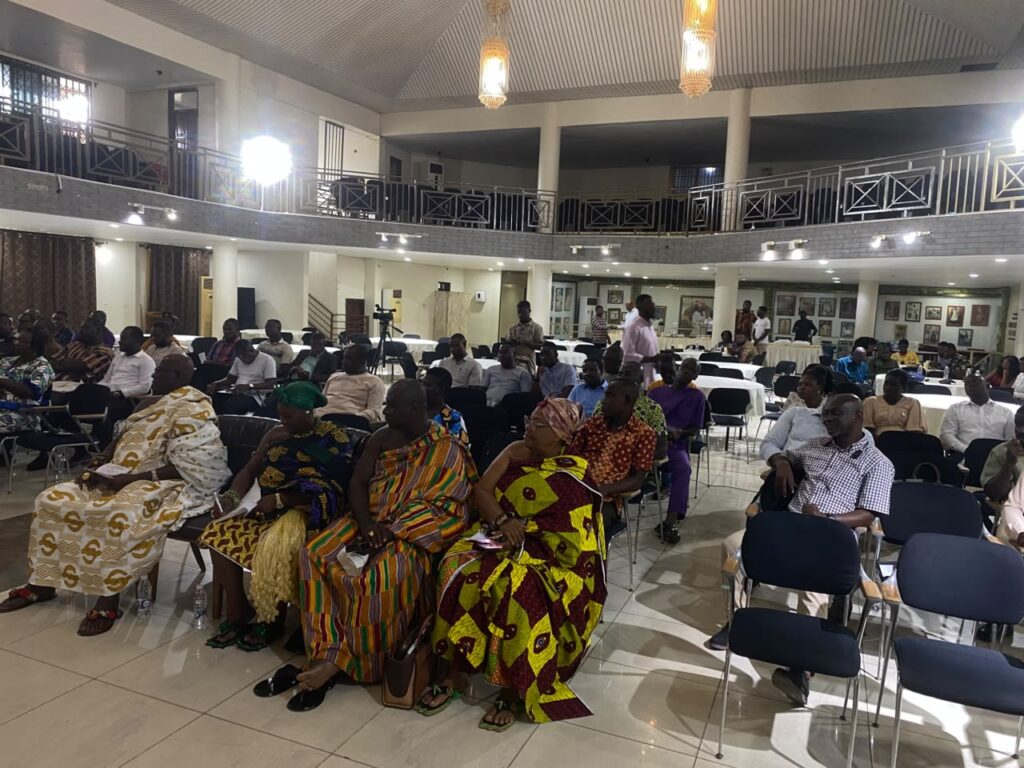
He said the Independent Review goes beyond assessing infrastructure data publication to examining project quality, climate resilience and integrity throughout the infrastructure lifecycle, adding that the findings would help strengthen institutional behaviour and improve governance across the region.
“The report is the outcome of five months of data collection, analysis, validation and field verification covering twenty-eight infrastructure projects across the region,” he noted.
Presenting the findings, Independent Review Team Lead, Prof. Matthew Kwaw Somiah, said the participating assemblies recorded an average performance score of about 52 percent, representing moderate performance and an improvement over previous assessments.
“We are performing moderately this time around, and there has been an improvement in the global score regarding the performance of the assemblies participating in the independent review,” he said.
Prof. Somiah explained that while the assemblies generally disclosed project information during the planning and procurement stages, transparency declined sharply during project implementation and completion.
“They will tell us how much they intend to spend on a project, but when it comes to how much was actually spent, they are not able to disclose that information to the public. It casts doubt on accountability and transparency in infrastructure delivery,” he said.
He also expressed concern that many assemblies failed to comply with the Right to Information Act by responding to information requests within the statutory 14-day period, noting that some responses took between 150 and 190 days.
The review further found that some water, sanitation and hygiene (WASH) projects were implemented without adequately considering the economic circumstances of beneficiary communities, resulting in facilities that could not be sustainably managed.
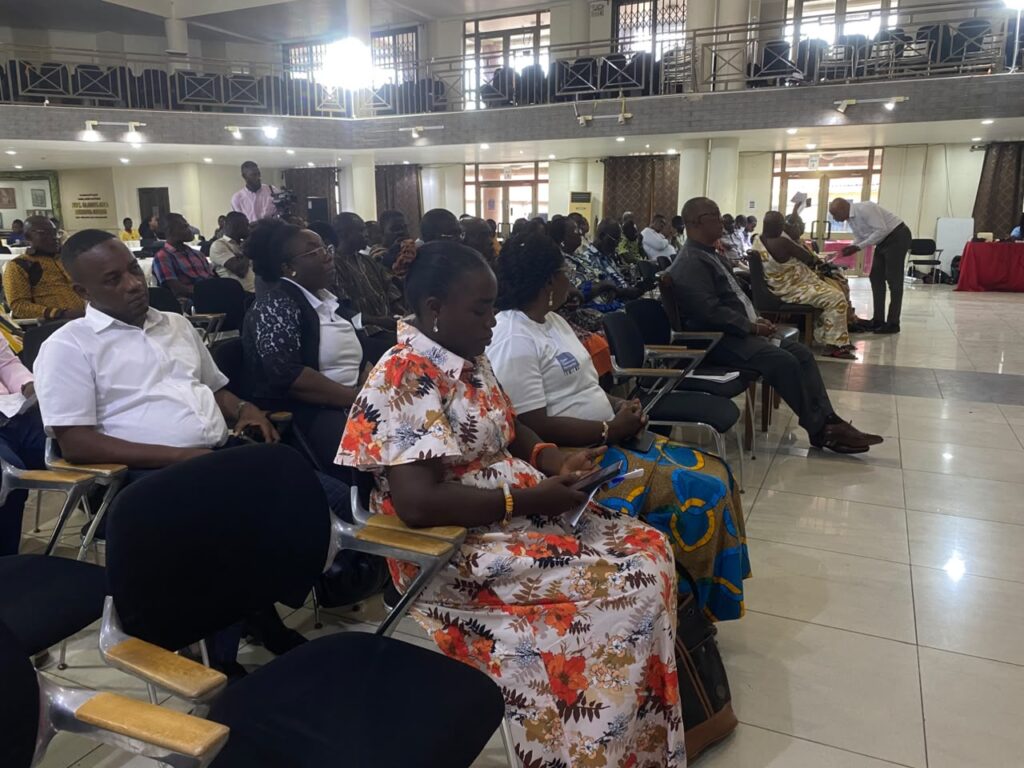
Prof. Somiah said CoST would support all participating assemblies to adopt its digital infrastructure disclosure platform to improve proactive disclosure and public access to project information.
Also speaking after the launch, CoST MEAL Officer Aziz Mahmoud said the findings should not be viewed as an attempt to expose wrongdoing but as an opportunity to strengthen public infrastructure governance through collaboration.
“This is a constructive engagement between civil society, the media and the assemblies. It is not just an exercise to highlight red flags, but to identify the issues and work together with the assemblies to resolve them,” he said.
Mr. Mahmoud noted that although Ghana has adequate laws promoting access to information, including the Local Governance Act, the Public Procurement Act and the Right to Information Act, the country lacks a standardised system for disclosing infrastructure information.
According to him, this often results in assemblies publishing basic project information during the planning stage while withholding details citizens need most during project implementation.
He also identified inadequate quality assurance as a major concern, explaining that many assemblies lack basic equipment for testing construction quality despite investing millions of cedis in public infrastructure.
“If we are willing to spend thousands or millions of cedis on a school or health facility, we should also be willing to invest in simple testing equipment to ensure the work meets the required standards,” he said.
Mr. Mahmoud said evidence from previous assurance reports had already led to improvements in infrastructure projects, citing an instance where findings prompted a contractor to provide additional disability access facilities and water storage infrastructure at a health facility.
He appealed to the media, civil society organisations and citizens to use the report as an accountability tool by asking informed questions and monitoring projects in their respective communities.
“There is a direct correlation between low disclosure and the quality of public infrastructure. When information is available in a format citizens understand, they can participate meaningfully and help ensure value for money,” he said.
The report recommends wider adoption of CoST’s digital disclosure platform, stronger quality assurance systems, improved publication of infrastructure information throughout the project lifecycle, enhanced citizen participation and greater compliance with Ghana’s transparency laws.